
The Donor Trust Crisis: Why 56% of Nonprofits Are Losing the Content Battle
Here's a statistic that should keep every nonprofit leader up at night: 56% of nonprofits don't have a donor engagement strategy. Not a sophisticated one. Not a half-baked one. None at all.
And yet, in the nonprofit world, trust isn't just important - it's everything. People don't donate to organizations; they donate to missions they believe in, led by people they trust. As Bob Burg famously said, "People do business with those they know, like, and trust." For nonprofits, that trust is the difference between a one-time donor and a lifelong champion of your cause.
The problem? Only 6% of nonprofits are actively investing in AI tools, even as 40% haven't adopted any marketing automation. Meanwhile, larger organizations with bigger budgets are drowning out smaller nonprofits with volume. The playing field has never been more uneven.
But here's what excites me: content automation, done right, can be the great equalizer. It can help a three-person development team compete with organizations ten times their size. The key is building systems that AMPLIFY your authentic voice instead of replacing it with generic "AI slop."
Let me show you how.
The Hidden Cost of Generic Content in Nonprofit Fundraising
If you think you've "solved" your content problem by having AI write your donor appeals, think again. I've seen nonprofits lose months of relationship-building overnight because their communications suddenly felt... off.
This is what the industry calls "AI slop" - generic, soulless content that lacks personality and is obviously machine-generated. In the nonprofit world, AI slop is particularly dangerous because donors can smell inauthenticity from a mile away. They gave to your organization because your mission moved them. When your content stops moving them, they stop giving.
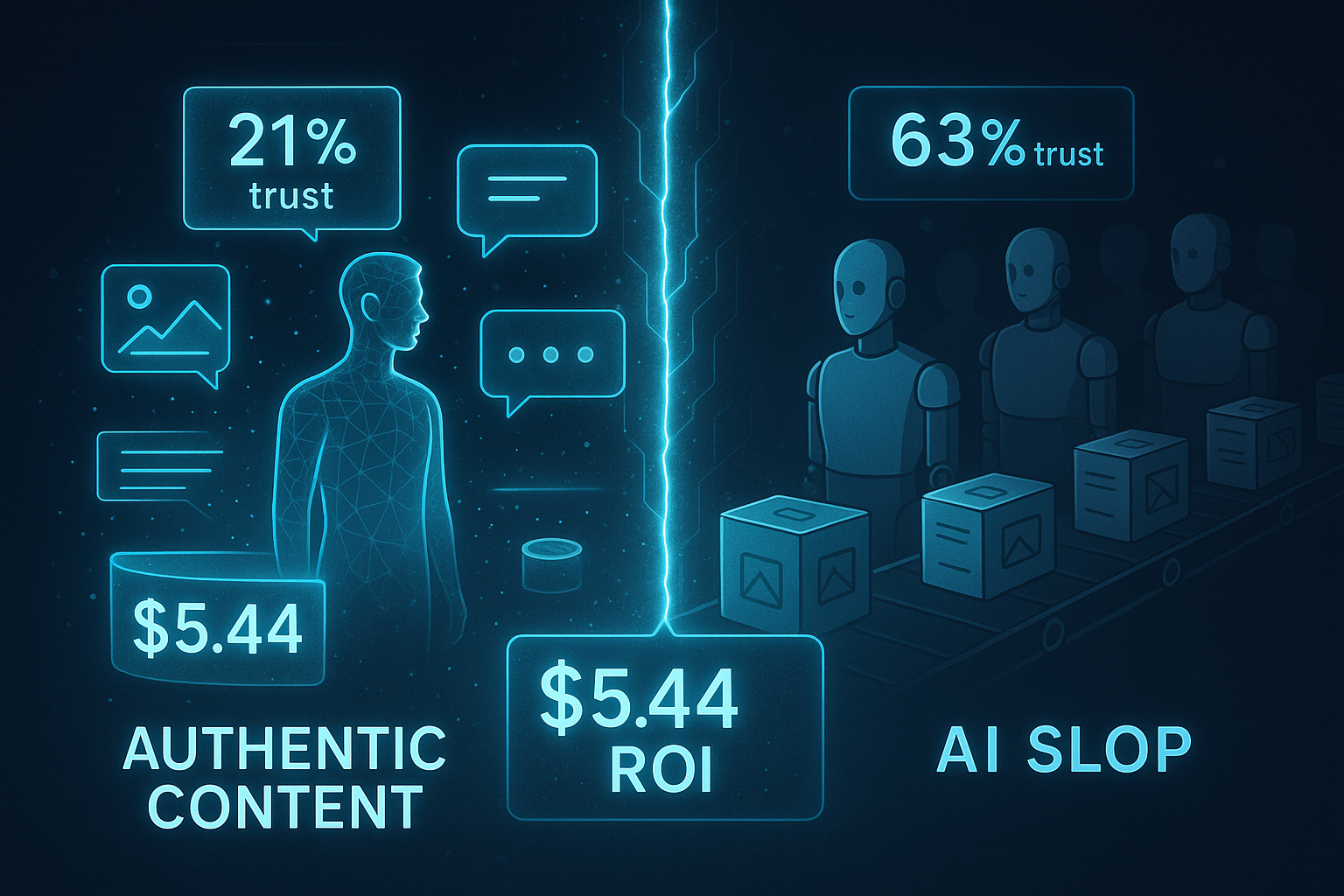
Research shows that only 21% of consumers trust obviously generic, templated content compared to 63% who trust authentic brand content. For nonprofits, where trust is the entire foundation of giving, that gap is existential.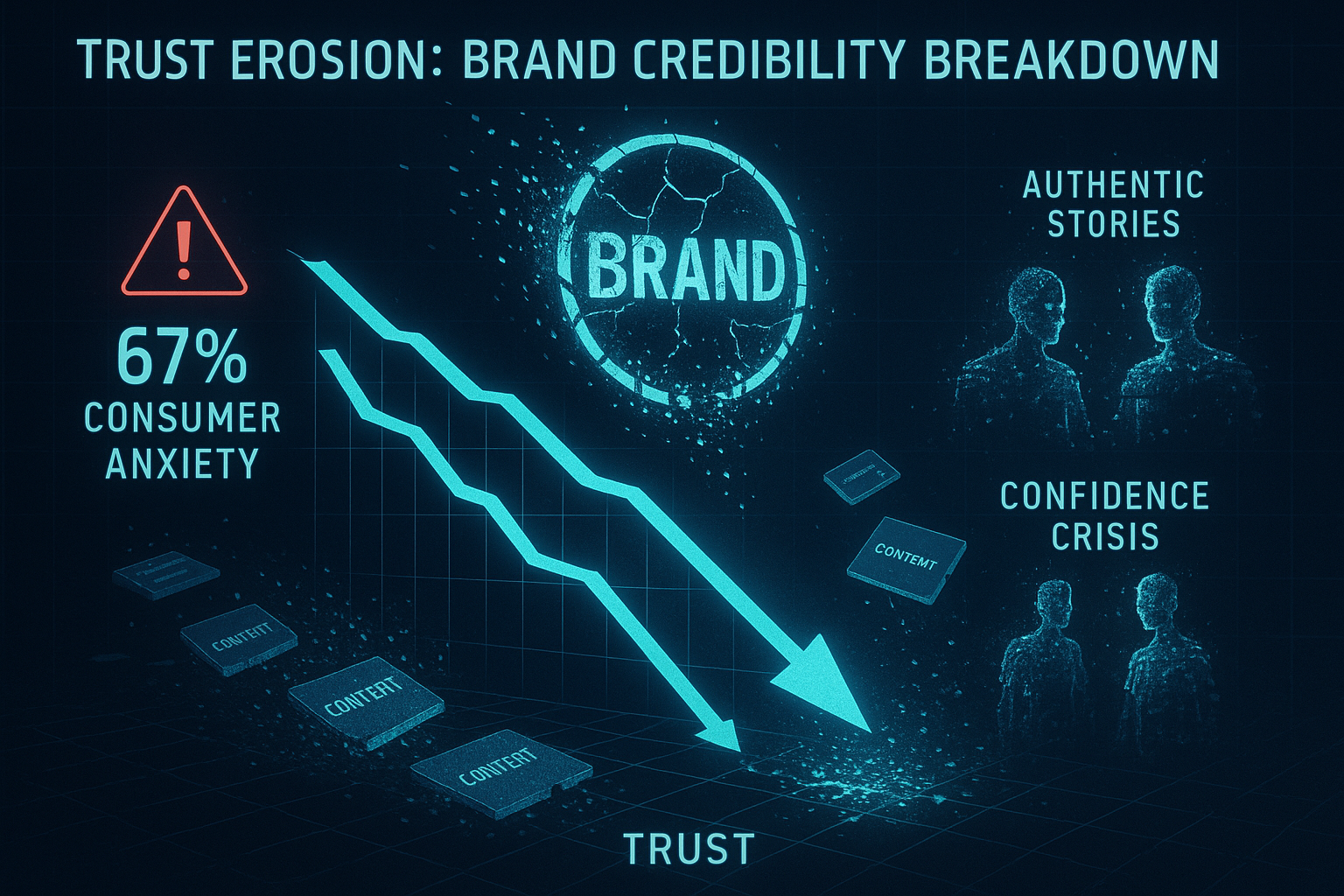
Why AI Slop Kills Donor Relationships
The numbers don't lie. 67% of consumers harbor anxiety about AI-driven marketing content. When donors can tell your thank-you note was cranked out by a robot, they start questioning whether you actually value their contribution.
Think about it from your donor's perspective. They gave $100 to help rescue animals, feed hungry families, or mentor at-risk youth. They want to feel connected to that mission. When they receive a generic "Thank you for your generous donation. Your support makes a difference..." email, that connection evaporates.
I've seen this happen with nonprofits who tried to scale too fast. One wildlife conservation group started using AI to write all their donor communications. Within six months, their donor retention rate dropped 15%. The content was technically correct, but it had lost the founder's passion, the specific stories of animals saved, the personal touches that made donors feel like partners in the mission.
The Trust Factor in Nonprofit Giving
When your content lacks that authentic voice, donors experience what researchers call a "confidence crisis." They start questioning not just the content, but the organization behind it. Is this nonprofit really doing what they claim? Does my donation actually make a difference? Are real people even running this organization?
The psychological impact compounds over time. First-time donors who feel disconnected rarely become repeat donors. And with donor retention rates averaging around 45%, most nonprofits can't afford to lose a single relationship to generic content.
The AMPLIFY Framework for Authentic Nonprofit Storytelling
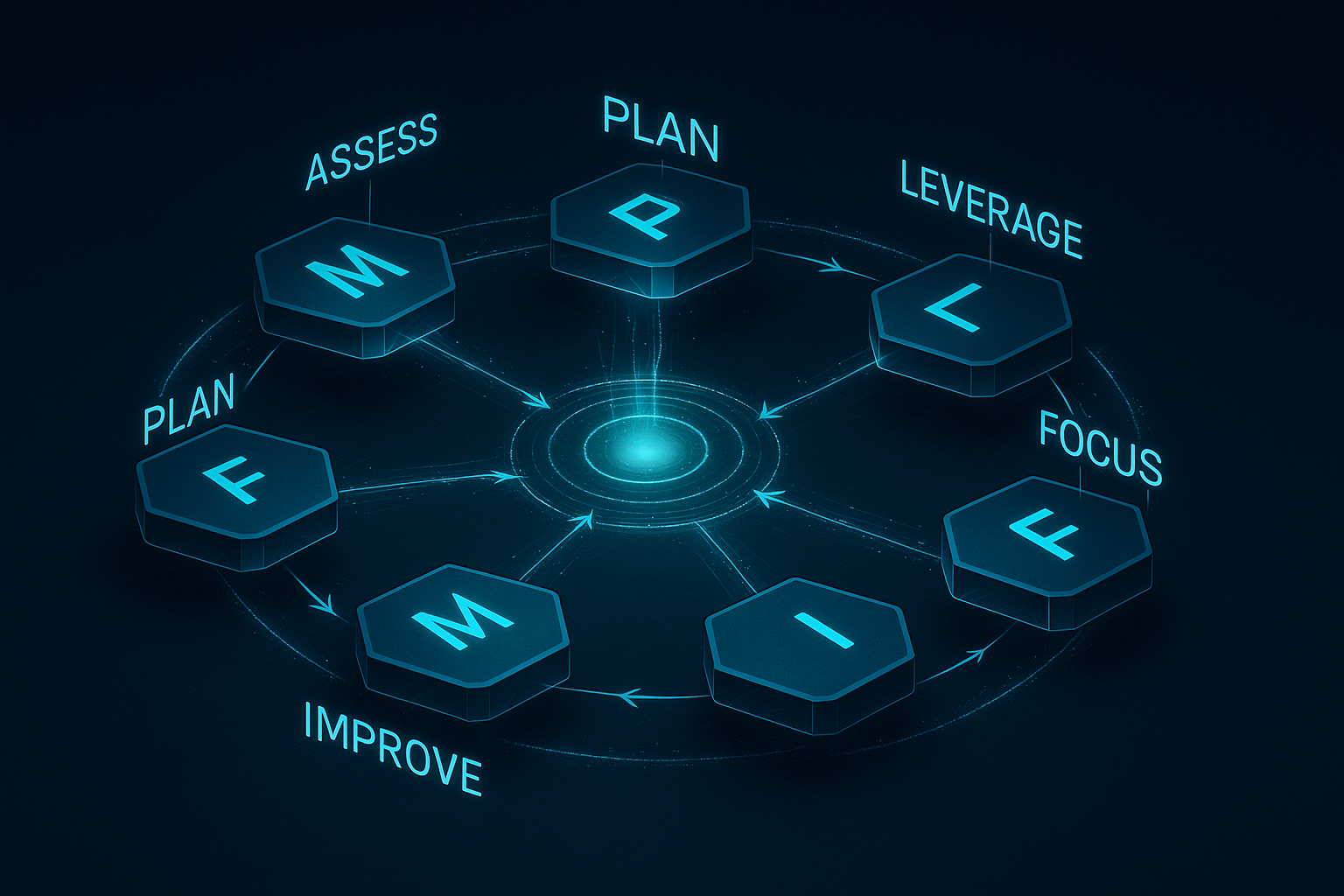
After years of working with mission-driven organizations and seeing what actually builds lasting donor relationships, I developed what I call the AMPLIFY framework. This isn't theory - it's based on real results from nonprofits who've figured out how to scale their storytelling without losing their soul.
The core principle is simple: AI should amplify your authentic voice, not replace it. Your organization's unique stories, your founder's passion, your beneficiaries' transformations - these are your competitive advantages. Technology should help you share them more widely, not water them down.
Let me break down each component:
A - Assemble Your Impact Stories
This is where most nonprofits go wrong. They jump straight into AI tools without building what I call their "impact repository" - a curated collection of the stories, testimonials, and moments that make their organization unique.
Think about it this way: every nonprofit has dozens of powerful stories scattered across staff memories, old newsletters, social media posts, and case files. But when it's time to write a year-end appeal or a grant narrative, those stories are nowhere to be found. Development directors end up starting from scratch every single time.
Your impact repository should include:
- Beneficiary transformation stories (with appropriate permissions and privacy protections)
- Donor testimonials about why they give and what your organization means to them
- Volunteer experiences that capture the heart of your mission
- Founder origin stories - why this cause matters personally
- Specific outcomes and metrics that prove impact
- Behind-the-scenes moments that humanize your work
One food bank I worked with created what they called their "Story Bank" - a simple shared document where staff could quickly log powerful moments. A single story about a grandmother crying when she received Thanksgiving groceries became the foundation for three different appeal letters, two grant applications, and a dozen social media posts. That's the power of a well-organized impact repository.
M - Mine Your Mission Voice
Every nonprofit has a unique voice, but most have never documented it. That voice lives in your founder's passionate speeches, your program director's field reports, your board chair's personal giving story. It's the way your organization talks about the problem you're solving and why it matters.
Here's where I see a lot of automation go wrong. Nonprofits feed generic prompts into AI and wonder why their grant narrative sounds like every other organization's. Your voice is your competitive advantage.
To mine your mission voice, start by gathering:
- Recordings or transcripts of founder/ED interviews about why they started or joined the organization
- Email threads where staff members explain your work to friends and family
- Informal presentations given to church groups, civic organizations, or community events
- Handwritten thank-you notes that capture authentic gratitude
- The specific phrases and metaphors your team uses repeatedly
One youth mentorship program discovered that their founder always described their work as "lighting a spark." That phrase appeared in her speeches, her emails, her casual conversations. Once they identified it, they could ensure every piece of content - whether AI-assisted or not - connected to that core metaphor. Their communications became instantly recognizable.
P - Plan Around Giving Seasons
Nonprofit content isn't random - it follows predictable rhythms. Year-end giving season. GivingTuesday. Your annual gala. Grant application deadlines. Awareness months related to your cause. Summer volunteer campaigns.
The problem is that most development directors are so overwhelmed by day-to-day operations that these moments sneak up on them. Suddenly it's November 15th and you haven't started your year-end campaign.
Strategic content planning means:
- Mapping your entire year with key fundraising moments
- Building content templates aligned to each campaign season
- Creating story pipelines that feed content needs months in advance
- Coordinating across channels - email, social, direct mail, and web
- Planning "evergreen" content that can fill gaps between campaigns
A domestic violence shelter I know creates their entire year-end campaign in August. They gather fresh impact stories in September, draft all their communications in October, and spend November actually building relationships instead of scrambling for content. Their year-end giving increased 40% the first year they implemented this approach.
L - Leverage AI to Scale Authentic Stories
Here's where the magic happens. Once you've assembled your stories, documented your voice, and mapped your calendar, AI becomes a powerful amplifier rather than a soul-sucking replacement.
The technology is just a tool. 77% of marketers now use automation for personalized content creation, but the successful ones all have one thing in common: they maintain human oversight and strategic thinking.
The right way to use AI for nonprofit content:
- Take one impact story and multiply it across email, social, website, and grant applications
- Personalize donor communications based on giving history and interests
- Draft first versions of appeals and narratives that you then infuse with specific details
- Repurpose long-form content into multiple shorter pieces
- Generate variations for A/B testing subject lines and headlines
The wrong way? Asking AI to "write a year-end appeal" without any input about your specific stories, voice, or donor relationships. That's how you get AI slop.
For a detailed step-by-step implementation of AI-assisted content workflows, see my comprehensive AI SEO research guide.
I - Integrate Donor Data with Content
This is where most nonprofits leave massive opportunity on the table. You have donor data in your CRM. You have impact stories in your files. You have email automation in your marketing platform. But these systems rarely talk to each other.
Integrated donor content means:
- Segmenting donors by their interests, giving history, and engagement level
- Sending different stories to donors who care about different aspects of your mission
- Acknowledging their specific impact in thank-you communications
- Triggering personalized content based on donor behavior
- Connecting program outcomes to specific donor contributions
A community health clinic transformed their donor retention by integrating their patient outcome data with their email marketing. When a major donor's contribution helped fund 50 mammograms, she received a personalized impact report showing exactly what her gift accomplished. Her next gift was 3x larger.
This level of personalization used to require a full-time staff member. With the right automation systems, a development team of one can deliver it at scale.
F - Fuel Your Content Engine with Impact Data
Every nonprofit produces impact reports, but most treat them as annual obligations rather than content goldmines. Your annual report contains dozens of stories, statistics, and testimonials that can fuel a year's worth of communications.
Content repurposing for nonprofits means:
- Breaking annual reports into monthly social media content
- Turning outcome statistics into compelling infographics
- Transforming beneficiary interviews into email series
- Converting program evaluations into grant narrative evidence
- Repurposing board presentations into donor updates
One environmental nonprofit takes their annual "State of the River" report and extracts 52 weekly social media posts, 12 monthly email highlights, and 4 quarterly donor updates. One piece of content, created once, fueling an entire year of communications.
The key is building systems that make repurposing automatic rather than an afterthought. When impact data flows naturally into your content calendar, you'll never scramble for something to post again.
Y - Yield Measurable Donor Trust
Here's where most nonprofits measure the wrong things. They track email opens and social media likes instead of the metrics that actually matter: donor retention, gift upgrades, and relationship depth.
Authentic automation delivers 34% higher click-through rates and significantly better long-term value. But for nonprofits, the real measure of success is trust - and trust shows up in specific behaviors.
Trust-building metrics to track:
- Donor retention rate - Are donors giving again next year?
- Gift upgrade rate - Are donors increasing their contributions?
- Response to appeals - How quickly do donors act when asked?
- Unsolicited giving - Are donors giving outside of campaigns?
- Referral behavior - Are donors bringing in new supporters?
- Multi-channel engagement - Are donors following you on social, attending events, and volunteering?
For a deeper analysis of how to measure content effectiveness, read my comprehensive analysis on whether SEO is still worth it in 2025. The principles apply directly to nonprofit content measurement.
Building Your Impact Repository (Your Nonprofit's "External Brain")
Let me share how I help nonprofits build their own impact repositories, because this is where the real transformation happens.
Most development directors have years of powerful stories locked in their heads. Staff members witness incredible moments that never get documented. Volunteers have experiences that could inspire thousands of donors. But without a system to capture and organize these stories, they're lost forever.
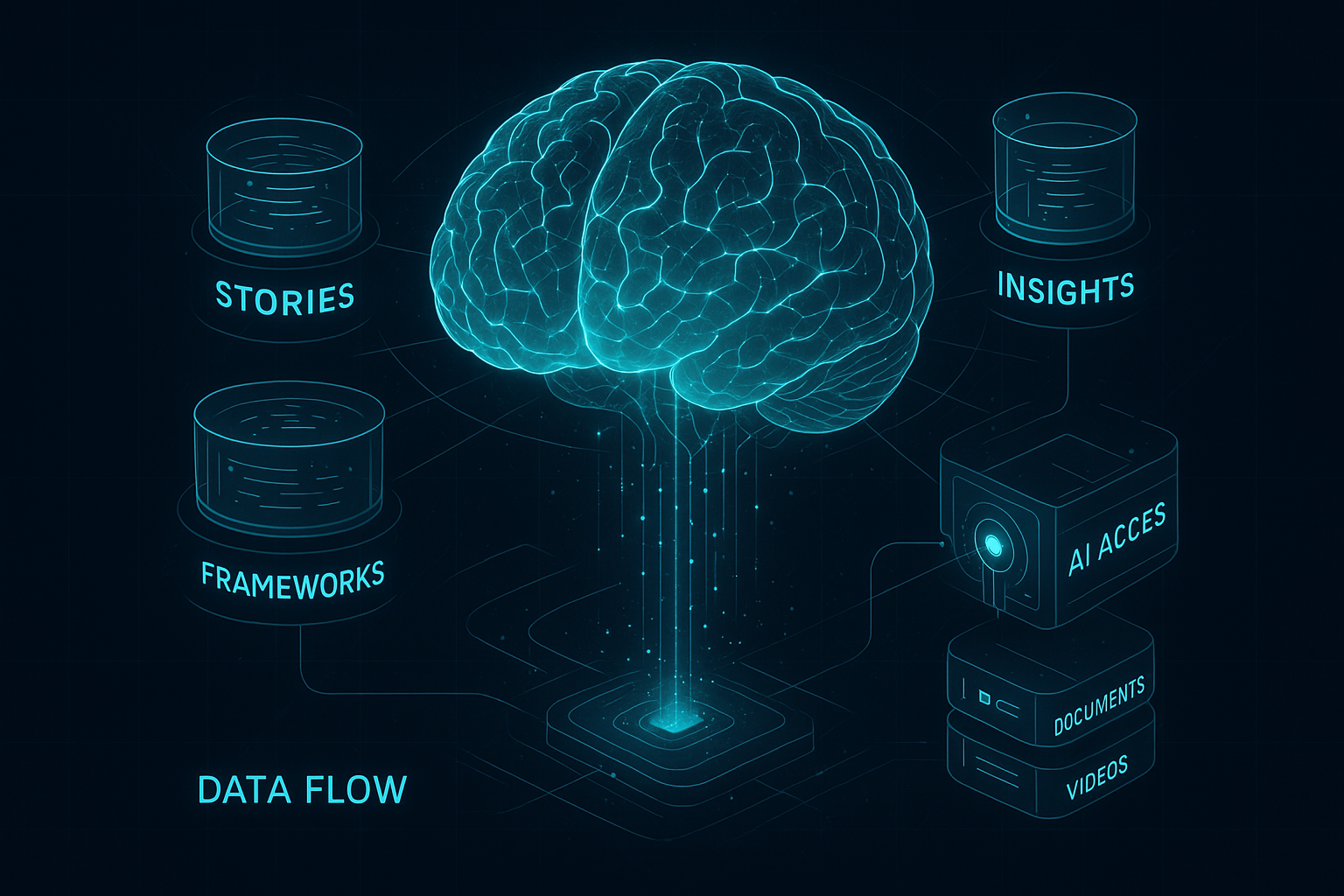
Your impact repository is your nonprofit's external brain - a living document that captures everything that makes your organization unique and makes it accessible for content creation.
Essential Elements for Nonprofit Impact Repositories
Document transformation stories with specific details: the situation before, the intervention, and the outcome after. A food bank might document: "Maria, single mother of three, was choosing between rent and groceries. After six months of weekly food boxes, she was able to save enough to put a deposit on a safer apartment."
Donor TestimonialsWhy do your donors give? What personal connection do they have to your cause? One animal shelter discovered that 40% of their donors had adopted pets from them - a powerful story angle they'd never leveraged.
Founder Origin StoriesWhy does this organization exist? What personal experience drove the founding? These stories create emotional connection that generic content can never match.
Impact Metrics with ContextNumbers alone don't move donors - stories behind numbers do. "We served 10,000 meals" is data. "We served 10,000 meals, which means 500 families didn't have to choose between paying rent and feeding their kids" is a story.
Unexpected MomentsThe most powerful stories are often the unplanned ones - a volunteer's surprise birthday party for a client, a child's first successful reading session, a grateful family returning years later to become donors themselves.
Organization Systems for Nonprofit Content
This isn't just about collecting stories - it's about making them accessible when you need them. A well-organized impact repository should let you answer questions like:
- "I need a story about a family we helped for this foundation grant" → Filtered by beneficiary type
- "What donor testimonials do we have from major gift donors?" → Filtered by donor level
- "I need content about our education program for our newsletter" → Filtered by program area
- "What success stories do we have from the past 6 months?" → Filtered by date
Simple tagging systems work. Program area, beneficiary type, donor connection, content type, date. A shared document or spreadsheet is enough to start - you don't need expensive software.
The key is making story capture part of your organizational culture. When a case manager witnesses a breakthrough, they should immediately think "this needs to go in the story bank." When a donor shares why they give, that conversation should be documented. When a volunteer has a meaningful moment, it should be captured.
Case Studies: Nonprofits Doing Content Automation Right
Let me walk you through some examples of organizations that have mastered authentic content automation, because the patterns are incredibly instructive for any nonprofit.

charity: water - Storytelling at Scale
charity: water has become the gold standard for nonprofit storytelling, and their approach perfectly illustrates the AMPLIFY framework in action.
Their impact repository is legendary. Every well they fund is documented with GPS coordinates, photos, and community stories. They've built systems that connect specific donors to specific projects with personalized impact reports.
Their voice is unmistakable - hopeful, visual, focused on dignity rather than pity. Whether you're reading an email, watching a video, or scrolling their Instagram, you know it's charity: water.
They leverage automation extensively for personalization, but every piece of content connects back to real stories and real communities. The result? Industry-leading donor retention and a passionate community of supporters who don't just give - they fundraise on the organization's behalf.
The lesson for smaller nonprofits: you don't need charity: water's budget to apply their principles. Start with documenting your impact, defining your voice, and building systems that connect donors to outcomes.
Local Food Bank - Small Team, Big Impact
A regional food bank I worked with had a development team of two people but was serving 50,000 families annually. They were drowning in content needs - donor communications, grant applications, social media, newsletter, annual report - with no bandwidth to create it all.
We implemented a simple version of the AMPLIFY framework:
Story capture system: Warehouse volunteers started texting photos and brief descriptions of meaningful moments to a dedicated phone number. These became the raw material for all content.Voice documentation: We recorded a 30-minute interview with the executive director about why she does this work. That transcript became the foundation for all AI-assisted writing.Automated repurposing: One monthly impact story became an email, three social posts, a newsletter section, and grant narrative fodder.Results after one year:
- Email engagement up 45%
- Donor retention improved from 38% to 52%
- Grant success rate increased (stronger narrative evidence)
- Staff time spent on content reduced by 60%
The key wasn't sophisticated technology - it was systems that captured authentic content and amplified it efficiently.
When Nonprofit Automation Goes Wrong
I also need to share a cautionary tale. A mid-sized health nonprofit got excited about AI and started using it to write everything - donor appeals, grant applications, social media, even personalized thank-you notes.
Within months, they noticed warning signs:
- Donor response rates dropped 25%
- Long-time supporters started giving less
- One major donor specifically mentioned that communications "didn't feel personal anymore"
- A foundation program officer commented that their grant narrative was "generic"
The problem wasn't using AI - it was removing human oversight and authentic input from the process. They were feeding the AI generic prompts and getting generic output. No real stories. No specific voice. No connection to their mission.
The recovery required going back to basics: rebuilding their impact repository, re-documenting their voice, and implementing human review for all external communications. It took six months to rebuild the trust they'd lost.
The lesson: automation without authenticity is worse than no automation at all.
Your 90-Day Implementation Roadmap for Nonprofits
Let me give you a practical roadmap for implementing the AMPLIFY framework at your organization. This is designed for busy development professionals who can't drop everything to overhaul their content systems.
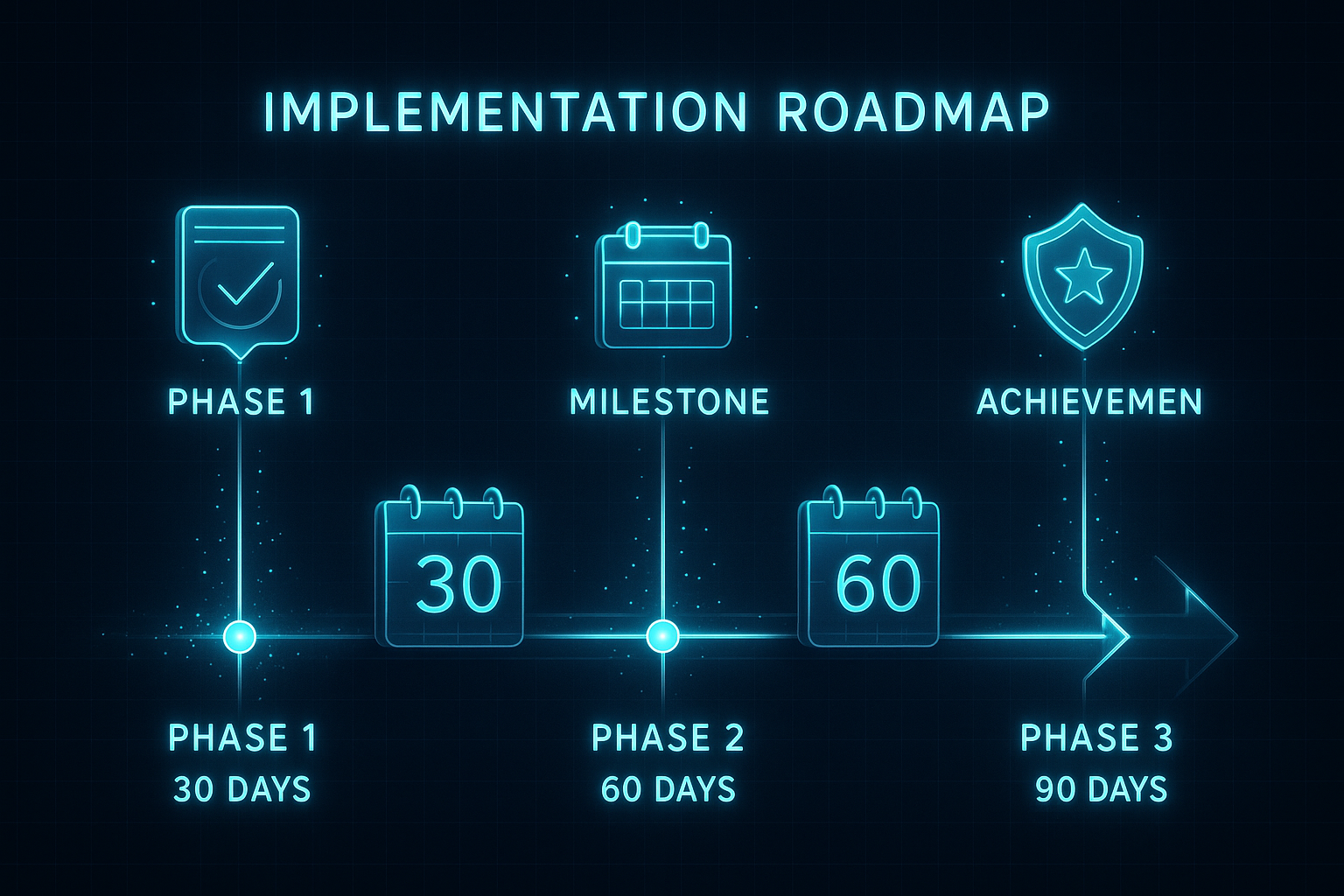
Days 1-30: Foundation Building
Start by auditing your existing content. Pull up your last five donor appeals, your recent newsletter, and your most recent grant narrative. Ask yourself: Could this content have come from any nonprofit in our space? Or is it uniquely ours?
Look for:
- Specific beneficiary stories (not generic descriptions)
- Your organization's unique voice and phrases
- Concrete impact data with context
- Personal touches that create connection
Rate each piece on a scale of 1-5 for authenticity. This baseline will help you measure improvement.
Week 2-3: Build Your Impact RepositoryThis is the most important work you'll do. Block off 2 hours and start documenting:
- Your origin story (why does this organization exist?)
- 5-10 specific beneficiary transformation stories
- 3-5 donor testimonials about why they give
- Your most compelling impact statistics with context
- Staff and volunteer stories that capture your mission
Don't try to make it perfect. Raw, real content is better than polished generic content.
Week 4: Document Your VoiceInterview your executive director, founder, or most passionate board member. Ask them:
- Why does this cause matter to you personally?
- What moment made you realize you had to do this work?
- How do you explain your work to someone at a dinner party?
- What makes your organization different from others in this space?
Transcribe the interview. Highlight the phrases, metaphors, and themes that repeat. This becomes your voice guide.
Days 31-60: System Setup
Make it easy for anyone in your organization to contribute to the impact repository:
- Set up a shared document or simple form where staff can log stories
- Create a text or email address where team members can quickly send updates
- Add "story capture" as an agenda item in program meetings
- Train volunteers on what makes a good story and how to share them
The goal: no powerful moment goes undocumented.
Week 7: Content Calendar MappingMap your entire year with key content moments:
- GivingTuesday and year-end campaign
- Your annual gala or major fundraising event
- Grant application deadlines
- Awareness months related to your cause
- Seasonal campaigns (summer, back-to-school, etc.)
For each moment, identify what content you'll need and what stories will support it. This prevents the "it's November and I haven't started my year-end appeal" panic.
Week 8: Set Up Automation WorkflowsStart simple:
- Email automation for new donor welcome series
- Social media scheduling for consistent posting
- Templates for common communications (thank-you notes, impact updates)
Every piece of automated content should draw from your impact repository and voice guide. If it doesn't, don't automate it yet.
Days 61-90: Scale and Optimize
Start with lower-stakes content:
- Social media posts repurposed from your story bank
- Donor welcome sequences using your documented voice
- Newsletter templates that pull from recent impact stories
Monitor everything. Watch for engagement drops that might indicate authenticity issues.
Week 11: Trust and Engagement MonitoringTrack the metrics that matter:
- Email engagement (opens, clicks, responses)
- Donor retention rate trends
- Gift upgrade rates
- Qualitative feedback from donors
If engagement drops, review your recent content for authenticity issues. Usually the problem is that automated content has drifted from your voice guide or stopped including specific stories.
Week 12: Refinement and OptimizationAnalyze what's working:
- Which stories generate the most engagement?
- Which subject lines drive opens?
- What content leads to actual giving?
Double down on what works. Cut what doesn't. Continuously feed new stories into your repository.
Common Pitfalls and How to Avoid Them
Let me share some mistakes I've seen nonprofits make so you can avoid them.
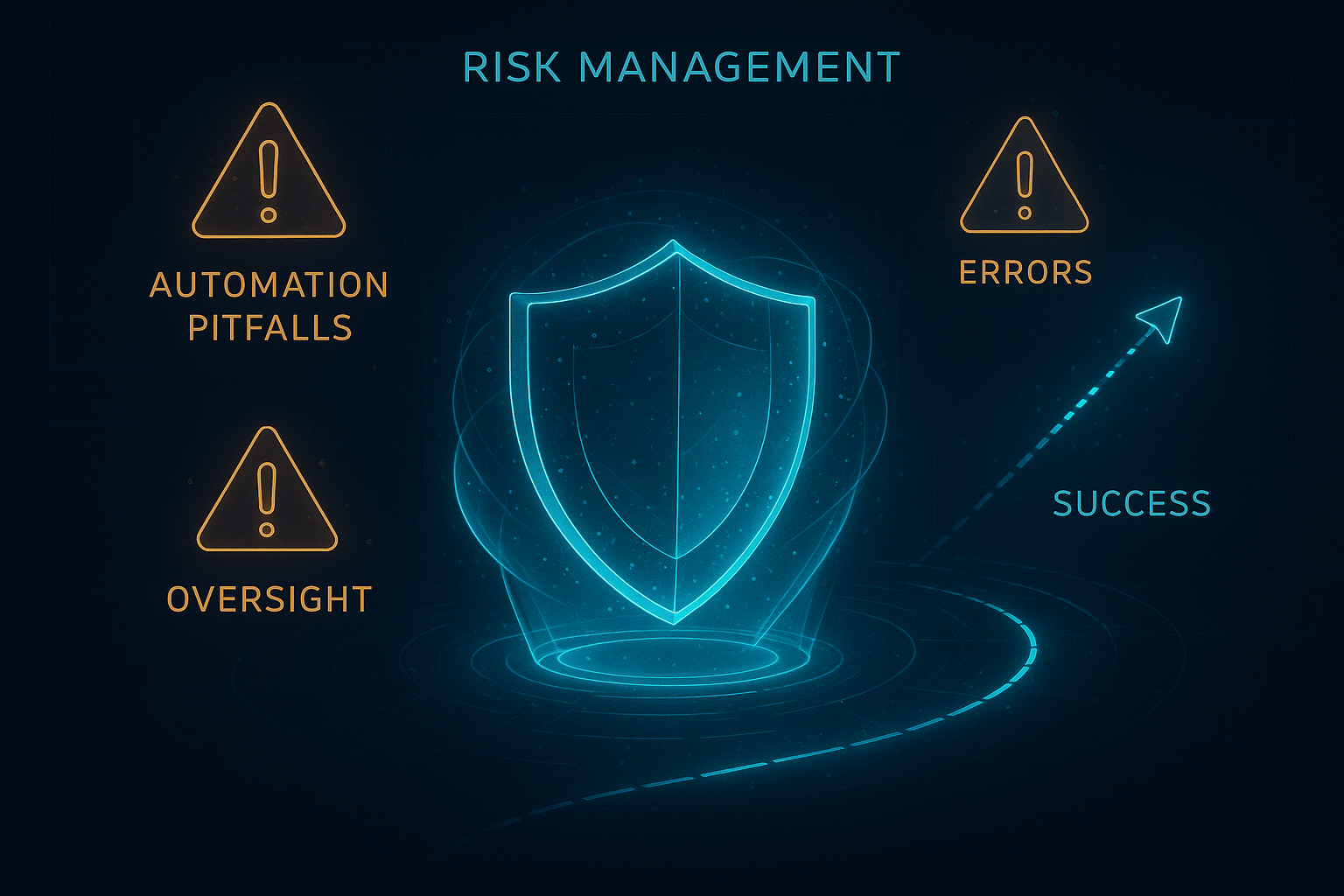
The "Set It and Forget It" Trap
I talked with a development director who was thrilled when she set up automated email sequences. "Finally," she said, "I can focus on major gifts instead of writing newsletters."
Six months later, she noticed her mid-level donors had almost entirely stopped responding. The automated content had become stale - same stories, same asks, same tone. Donors felt like they were receiving form letters.
Only 21% of consumers trust fully automated, templated content. Nonprofits need human oversight even more than businesses because the relationship is built entirely on trust.The solution: Schedule monthly reviews of all automated content. Fresh stories every quarter. Personal touches added to templated communications. Automation should save you time on production, not eliminate your involvement entirely.
The Generic Story Curse
Watch for warning signs in your content:
- Stories that could apply to any nonprofit in your space
- Statistics without context or emotional connection
- Appeals that focus on your organization's needs rather than donor impact
- Thank-you notes that could be sent by anyone to anyone
Generic content kills donor relationships slowly. Each piece erodes trust just a little. Over time, donors stop feeling connected to your mission.
The antidote is specificity. Instead of "Your gift helps families in need," try "Your gift helped Maria keep her three kids fed while she recovered from surgery." Specific beats generic every single time.
The Trust Erosion Risk
Monitor engagement quality, not just quantity. A nonprofit might celebrate growing their email list from 5,000 to 15,000 - but if open rates dropped from 35% to 15%, they've actually lost ground.
Trust indicators to watch:
- Declining email engagement
- Dropping donor retention rates
- Fewer responses to appeals
- Reduced unsolicited giving
- Major donors mentioning communication concerns
If you see these warning signs, immediately audit your recent content for authenticity. Usually the issue is that you've drifted from your voice, stopped using specific stories, or relied too heavily on AI without human oversight.
Recovery requires going back to basics: personal outreach to affected donors, recommitment to authentic storytelling, and rebuilding trust one communication at a time.
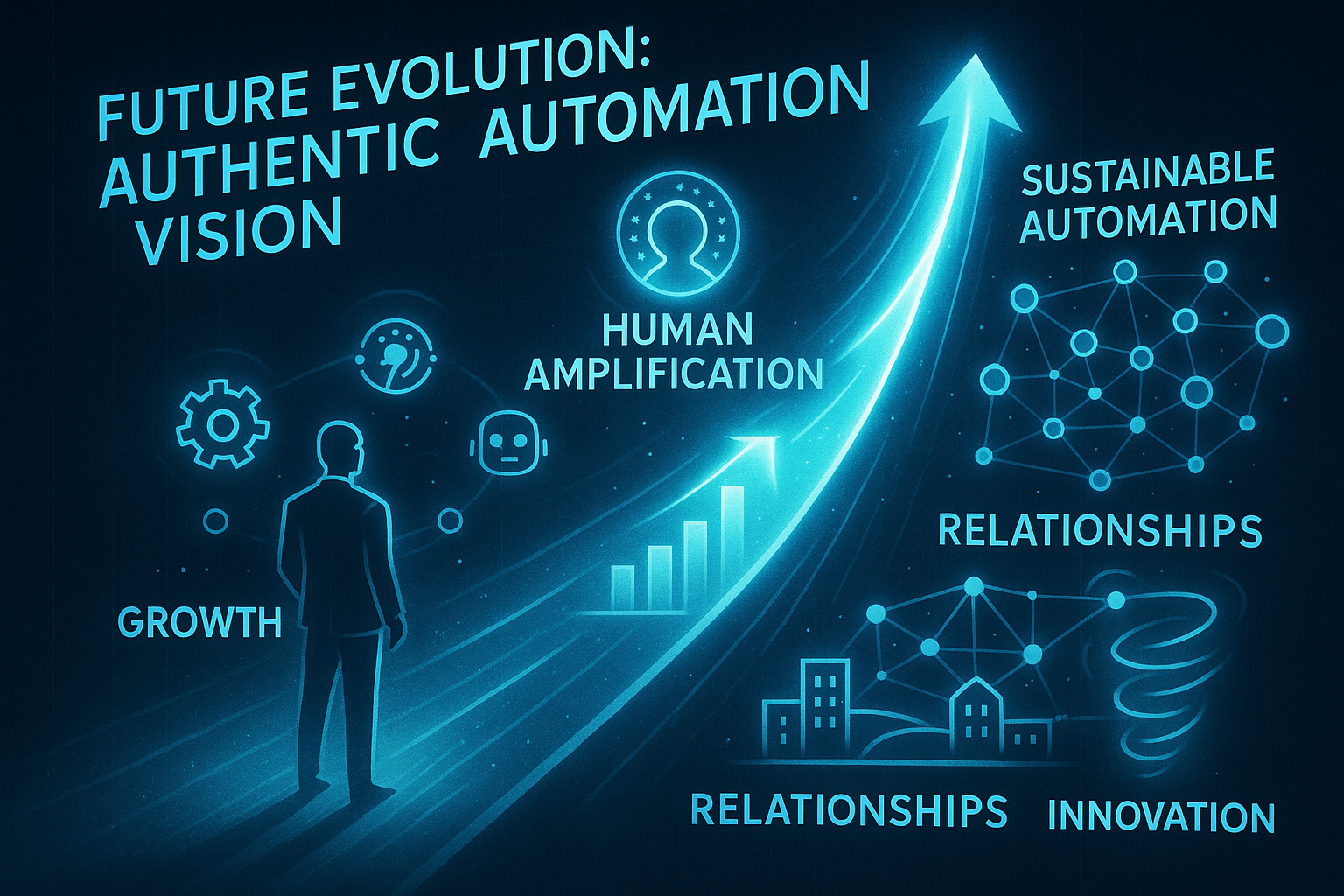
The Future of Nonprofit Content: AI as Amplifier, Not Replacement
Here's what excites me about the future: AI technology is getting better at amplifying human voices rather than replacing them. The tools are evolving toward genuine personalization and authentic storytelling assistance.
But the fundamental truth remains: donors give to missions they believe in, led by people they trust. No amount of technology changes that.
The nonprofits that will thrive are the ones using AI to do MORE relationship-building, not less. They'll use automation to free up staff time for personal donor calls. They'll use AI to personalize communications based on genuine understanding of donor interests. They'll scale their storytelling without losing their soul.
The nonprofits that will struggle are the ones using AI to cut corners on authenticity. They'll pump out generic content, wonder why donor retention drops, and blame the economy or donor fatigue.
With only 6% of nonprofits actively investing in AI and 40% not using any marketing automation, there's a massive opportunity for organizations willing to do it right. The playing field is wide open for nonprofits that master authentic automation.
Your Next Steps
Here's what I want you to do today: start building your impact repository. Open a shared document and write down three specific stories of impact from the last year. Not generic descriptions - real stories with real people (or anonymized versions if needed for privacy).
That's it. Three stories. That's the seed of your nonprofit's external brain.
Then, this week, interview one person in your organization about why they do this work. Record it or take notes. Listen for the phrases they use, the passion in their voice, the specific moments that drive them. That's your voice guide starting to take shape.
Remember the AMPLIFY method: Assemble your impact stories, Mine your mission voice, Plan around giving seasons, Leverage AI to scale authentic content, Integrate donor data with personalization, Fuel your content engine with impact data, Yield measurable donor trust.
The organizations that build these systems now will have a massive advantage in the years ahead. While others struggle with donor fatigue from generic content, you'll be building deeper relationships with every communication.
Your mission matters. Your stories matter. Your donors want to be moved, not processed. Automation should help you share your authentic voice with more people, more personally, more often.
If you need help implementing this framework at your organization, I'd love to help. We specialize in helping nonprofits build content systems that scale authentic storytelling. Schedule a call and let's talk about how to turn your development team into a storytelling powerhouse.
---
The need is always greater than the resources. Let's change that.
When I volunteered at Harriet Buhai Family Law Center during law school, I'd feel very, very sad when we couldn't take on a client because we didn't have the budget. Families who desperately needed help with restraining orders or custody issues—turned away because the resources just weren't there.
That experience taught me something important: if nonprofits had more donors, more consistent funding, they could help more people. It's that simple.
That's why we start nonprofit teams with a single hands-on workshop: three to four hours, your real donor communications, and staff who leave able to do this themselves.
See the Workshop →